Four centuries, on the record
History
The history of this place can be read — in notarial deeds from 1704 to 1808, in a correspondence from the winter of 1896/97, and in the summary Jean Ribéreau-Gayon compiled from these documents in 1979.

Lieu-dit
The name
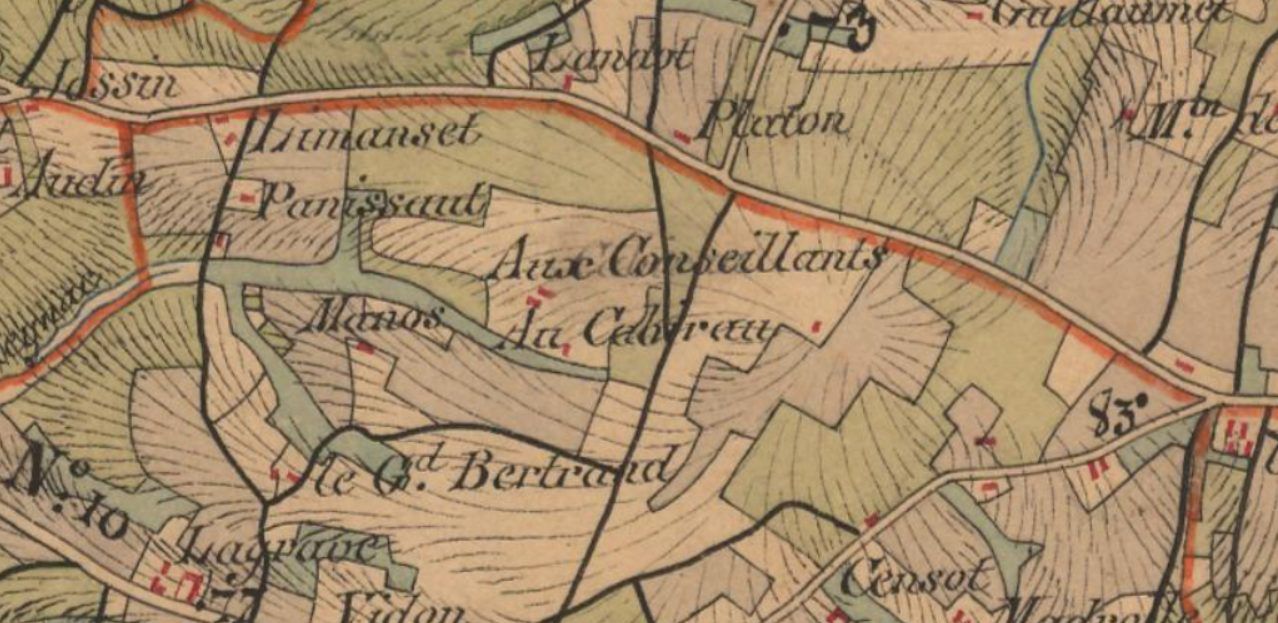
The estate’s present name — Aux Conseillans — is also the name of the lieu-dit, the place-name of the land it stands on, recorded in the land register. By one tradition it goes back to the Wars of Religion and denoted those who took sides and gave aid, the conseillans et aydans — an appealing but not firmly documented interpretation.
In the historical record the estate long appears under other names: the métairie de la Lande and Panissaut, later Domaine des Conseillans. In the 20th century the oenologist Jean Ribéreau-Gayon used the form Les Conseillans. Today we use the spelling that matches the lieu-dit, Aux Conseillans, while explaining the older forms wherever the past is discussed.
1704
Origins: Manos and the Métairie de la Lande
The estate grew out of two originally separate holdings in the parish of Saint-Caprazy — the old dialect name for Saint-Caprais-de-Bordeaux. One was the bourdieu de Manos, a small self-contained farm; the other the larger métairie de la Lande.
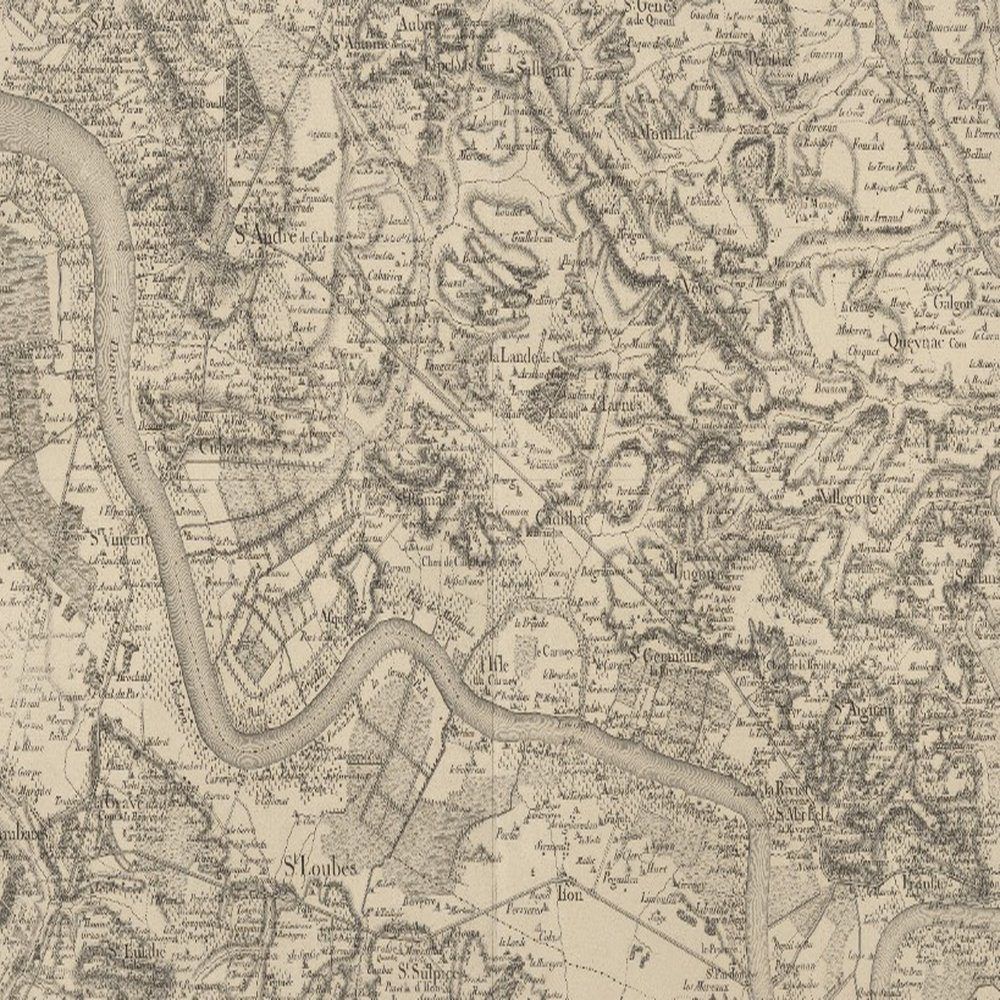
On 19 July 1704 the Manos holding was divided between the sieurs Duplessy and Croizier, the farm’s spring remaining shared. From this division comes a parcel attached to the métairie de la Lande as early as 1704, and still part of the estate today. The métairie then held vines, later lost. The region’s main roads — towards Sadirac, Créon and Camblanes — already existed in 1704.
1738–1751
The reunification under Pierre Daban-Broca
The decisive step was the work of a Bordeaux burgher and sworn auctioneer, Pierre Daban-Broca. In 1738 he acquired Panissaut, the future core of the estate. In 1749 he added the neighbouring métairie de la Lande — its heavily indebted seller leaving behind a property “much dilapidated, threatening ruin.” The following year the feudal family right of repurchase, the retrait lignager, came into play: in 1750 the local lord drew the property back, and only in 1751 did Daban-Broca buy it back for good. He thus united Panissaut and the métairie into a single, self-contained estate — whose boundaries essentially date from 1751.
As everywhere under the Ancien Régime, the land was held of seigneurs who levied dues — yet the true owners were the tenanciers who worked it.
1751–1808
The rise of the vineyard and the manor house
Under Daban-Broca the estate was restored and planted with vines, with clear success: in a single quarter of a century, from 1751 to 1778, its value rose tenfold, from 2,400 to 22,000 livres — a reflection of the great rise of Bordeaux wines in the third quarter of the 18th century.
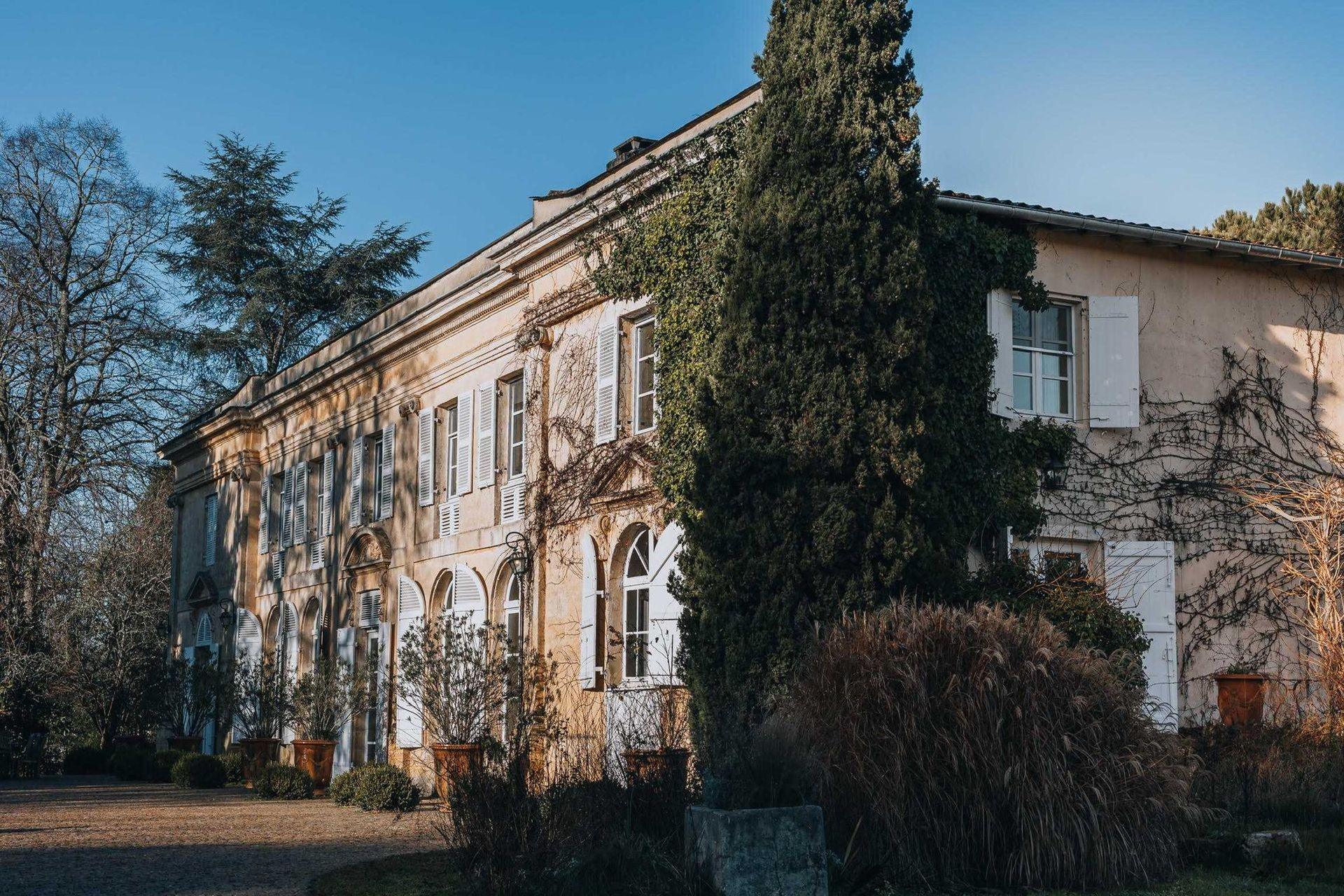
Around 1800 his son Jacques built the manor house, on the older walls of an earlier building whose staircase still survives; the south façade is the one seen today. During the Revolution the estate was untroubled — it remained in family hands. In 1808 Jean Daban-Broca, Pierre’s grandson, finally sold the property, then called domaine de Pénissant et Limancet, to Joseph Gabet for 24,000 francs. The deed describes the house room by room — façade to the south, the winegrower’s dwelling to the west, the vat-house to the east, the cellar to the north — its interior not yet finished, together with vessels, equipment and a pottery kiln.
19th century
Flourishing, crises and the Montéro family
Over the century the name des Conseillans gradually took hold. For long stretches the surviving sources are silent; it is documented that the estate was valued at 80,000 francs in 1870. Then came the great vine diseases — oidium, phylloxera and mildew — which devastated the vineyard. Of the roughly 45 hectares of former days, only about two and a half hectares of vines remained.
“… I became utterly disheartened when I saw my vines lost.”
1897
The Guillot de Suduiraut family
At the turn of 1896/97 Madame Montéro sold the weakened estate; the surviving correspondence records the negotiation day by day, down to the telegram “deal concluded at fifty-four.” The buyer, Maurice Guillot de Suduiraut, was co-owner of the Médoc estate Château Citran. Worn down by the vine, he deliberately sought a property without vines. He died in 1914. It is thanks to the Guillot family that the old deeds and letters were preserved — from them Jean Ribéreau-Gayon later wrote the historical summary that still forms the backbone of this chronicle.
1938 – today
The 20th and 21st centuries
In 1938 Professor Jean Ribéreau-Gayon, one of the co-founders of modern oenology, acquired the estate. He set up an experimental cellar here, where Émile Peynaud among others worked and where studies on malolactic fermentation took shape. He replanted the vineyard and remained attached to the estate until his death in 1991; he is buried at Saint-Caprais. At his instigation the domaine was protected as a Site classé on 30 December 1975 — to preserve the late-18th-century chartreuse and its park of rare trees.
After more than six decades in the Ribéreau-Gayon family, Serge and Sylvia Ruiz took over around 2002, followed in 2011 by Bruce Jackson and Irina Krasovskaya. Since 2023, Marc and Ellen Ruhland have run the estate — once again under the name of its lieu-dit, Aux Conseillans.
Maps & documents
Traces on paper
Sources & method
How we know this
This overview rests first of all on the Historique résumé du Domaine des Conseillans(written in 1979 by Jean Ribéreau-Gayon, typed up in 1982), which draws on the notarial deeds of 1704, 1738, 1749, 1751, 1777/78 and 1808 and the 1896/97 correspondence — partly in the transcription of the historian R. Pijassou. The 20th-century details come from prefectural correspondence (1974–1976), the DREAL “Site classé” record, obituaries from 1991 and an estate brochure.
Some points are not yet fully established — the exact wording of certain dates, the estate’s development between 1808 and 1896, individual cadastral details.
We have not been here long, the newest in a long line — and we are glad to carry the story of this place a little further.